
Updated: November 25, 2026
Key Takeaways
- Outbound prospecting tools help sales teams find, enrich, prioritize, and reach potential buyers before they ever raise a hand.
- A modern stack spans five categories, from buyer-signal platforms and enrichment to contact databases, sequencing, and AI research agents.
- Signal-based prospecting beats static list-building because it triggers outreach on real buying behavior instead of guesswork.
- The criteria that matter are signal quality, identity resolution, prioritization, native integrations, and time-to-action, not raw database size.
- Connected tools that keep buyer intelligence, prioritization, and action in sync beat tool sprawl that fragments data and slows reps down.
Your SDRs are busy. They're just not selling. The outbound prospecting tools meant to free them up often pile on more noise instead.
Buyers have run out of patience for it. A June 2025 Gartner survey found that 73% of B2B buyers actively avoid suppliers who send irrelevant outreach. Connect rates and reply rates keep sliding, and generic messages get deleted without a second thought.
So the real question facing every SDR leader isn't "which outbound prospecting tools have the most contacts?" It's sharper than that: Which stack helps your team reach the right person at the right moment?
This guide maps the categories of sales prospecting tools, then shows why a signal-based approach outperforms the old volume playbook. It also compares the tools teams actually evaluate and lays out how to wire them into one motion.
What Are Outbound Prospecting Tools?
Outbound prospecting tools are software that helps sales teams find, enrich, prioritize, and reach potential buyers proactively. They go to work before a buyer submits a form or requests a demo.
They cover the work of building an account list and filling in accurate contact details. They also help you decide who to contact first, then get a relevant message out the door.
That's different from inbound tooling, which routes and qualifies leads who already came to you. It's also broader than a sales engagement platform, which runs the sequences but doesn't tell you who to contact or when.
In practice, most teams run several of these tools side by side. That's exactly why it helps to understand what each one does before you buy another.
The category is shifting, too. For years, sales prospecting software meant static list-building: pull a database export, load it into a sequencer, and send.
Today, the strongest B2B prospecting tools organize around buyer signals. Reps work accounts showing intent now, rather than a list that was accurate three months ago. For an SDR leader, that shift is the difference between good outbound scaling consistently and results that swing wildly from rep to rep.
Why Prospecting Tools Matter More Than Ever in 2026
The math on outbound has shifted, and not in the seller's favor. Buyers increasingly research and buy on their own terms. Gartner found in March 2026 that 67% of B2B buyers prefer a rep-free experience, and 45% used AI during a recent purchase.
Relevance is now the price of entry. Forrester found that 82% of B2B marketing decision-makers agree buyers expect an experience personalized to their needs.
Miss that bar, and generic prospecting doesn't just underperform. It costs you the account.
Bad data compounds the problem. Validity's 2025 report on CRM data management found that 76% of CRM users say less than half of their organization's data is accurate or complete. The same Validity report found another 37% lose revenue directly because of it.
Put those together and the takeaway is simple: GTM teams don't need more tools that add volume. They need a system that creates relevance and prioritization, so reps spend their limited selling time on the buyers most likely to convert.
The 5 Categories of Outbound Prospecting Tools
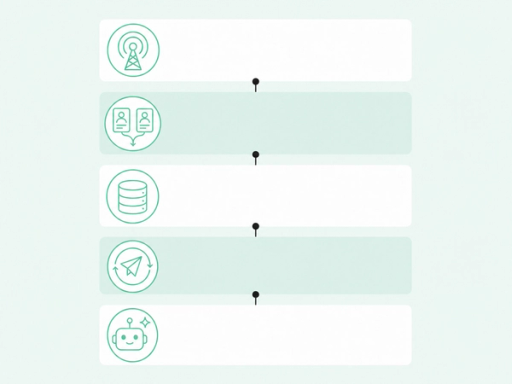
Most teams assemble outbound stacks one purchase at a time, which is how they end up with overlapping tools and no clear source of truth. It helps to start with a map. Here are the five categories of outbound sales tools, the job each one does, and what to look for.
The categories build on each other. Signals tell you who, enrichment and databases tell you how to reach them, and sequencing carries the message. AI speeds up the work in between.
Buyer-Signal & Intent Platforms
This is the organizing layer of a modern stack. Buyer-signal platforms detect who's in-market by reading behavior across sources like job changes, website visits, product usage, community activity, social engagement, and G2 reviews. Much of that activity lives in the dark funnel, where buyers research quietly without filling out a form.
Common Room sits in this territory, aggregating more than 50 signal sources and resolving them to the person, not just the account. Reps know the specific buyer to contact and why.
Data Enrichment & Identity Resolution
Enrichment turns a half-filled record into a complete, deduplicated profile of a person and account. Match rate and dedup quality matter far more than how many rows a vendor claims.
Common Room's Person360 illustrates the bar. Common Room reports that its identity-resolution engine delivers 30-50% higher match rates than competitors in head-to-head bakeoffs. It also reduces duplicate records by up to 79% through AI-enhanced identity merging.
Contact & Company Databases
These directories supply the verified emails and phone numbers you reach out with. Evaluate them on coverage and freshness, not headline count, because a stale record is worse than no record.
As a reference point, Common Room's Prospector draws on a continuously refreshed directory of 400M+ B2B profiles and adds AI-powered prioritization on top.
The prioritization is the part that matters most: A directory is only useful when it hands reps the right names first. A raw export to sort through by hand doesn't cut it.
Sales Engagement & Sequencing
Sequencing tools run the multichannel outreach across email, calls, and social steps, and they track every touch in cadences. They're essential for execution.
Just remember what they don't do: A sequencer executes outreach, but it can't tell you who to contact or the moment worth contacting them. That decision has to come from the signal layer upstream.
AI Research & Personalization Agents
AI agents automate the grind of account research and message drafting. They can compress hours of manual work into minutes.
But an agent is only as good as the buyer intelligence feeding it. AI without context is just noise at scale.
Common Room's RoomieAI works off Context360, a person-level buyer intelligence layer built for trustworthy AI output. Drafts and next-best actions reflect real signals rather than guesses.
Outbound Prospecting Tools Compared
Categories tell you what to buy; a side-by-side view tells you how the options differ. The table below lays out widely evaluated tools on the factors that actually move pipeline. Read it to see where each one fits, not which claims the biggest database.
| Tool | Best for | Signal coverage | Data source | AI agent support | Pricing model |
|---|---|---|---|---|---|
Common Room | Signal-based prospecting with identity resolution | 50+ sources: community, social, web, product usage, and reviews | 400M+ B2B profiles | RoomieAI research and outreach agents | Custom |
Clay | Teams building custom enrichment workflows | Limited native signals | 150+ data-provider waterfall | Claygent research agent | Credit-based, free tier |
Apollo | SMB all-in-one prospecting | Bombora third-party intent | 270M+ contacts | Email drafting assistant | Freemium |
ZoomInfo | Enterprise contact-data depth | Proprietary intent, WebSights visitor tracking | 100M+ company profiles | Yes | Custom, annual |
Unify | Automated warm-outbound plays | Intent plays, 40+ source waterfall | 1.1B contact records | Yes | From $20/mo, plus custom |
Outreach / Salesloft | Running multichannel sequences | Downstream of the signal layer | None native | Rhythm prioritization | Seat-based, custom |
Orum | High-volume live phone conversations | None native | Phone-number enrichment | Live-answer detection | Seat-based, custom |
Figures reflect each vendor's publicly stated product and pricing details; where a vendor doesn't publish a price, the table shows custom. The pattern is consistent: Contact databases and sequencers compete on coverage and execution, while a signal layer competes on who to work first and why.
How to Build a Signal-to-Send Outbound Workflow
Categories and tools only matter once they run as one motion. Here's how to turn a buying signal into a sent message, step by step.
- Pick your triggers. Choose the buying signals worth acting on, like job changes, website visits, product usage, and community activity.
- Resolve signals to a person. Person360 merges anonymous and known activity into one profile, so reps know the exact buyer.
- Route the prioritized buyer to a sequence or dialer. Prospector hands reps the right names first, then pushes them into outreach.
- Personalize with AI grounded in real context. RoomieAI drafts from Context360, so messages reflect actual signals instead of guesses.
- Measure replies and meetings, then feed outcomes back. Every result updates shared context, so targeting sharpens each cycle.
Done well, the workflow runs as one loop: know who's in-market, decide who to work first, and act while intent is fresh.
Signal-Based Prospecting vs. Static List-Building
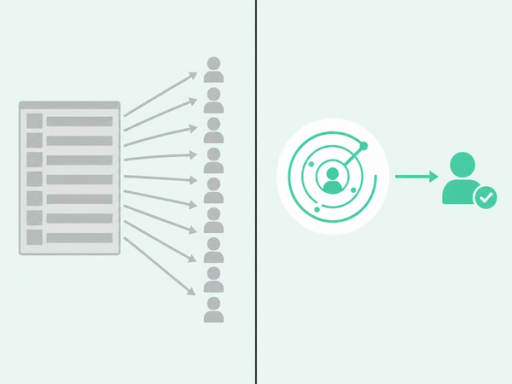
Here's the divide that separates modern stacks from legacy ones.
Static list-building starts with a fixed list and pushes the same message to everyone on it. It's high-volume and low-relevance, and it's losing. Buyers ignore it, and the underlying data decays the moment you export it.
Signal-based prospecting flips the order. You start with a real buying behavior: a champion changing jobs, a pricing-page visit, or a pointed question in a community. Then you reach out while that intent is fresh.
The difference isn't only timing. Person-level intent tells you the specific human showing interest. Account-level intent only tells you a logo is warm somewhere.
Gartner research shows buyers increasingly move through their buying tasks on their own, a point Alyssa Cruz, Senior Principal Analyst in the Gartner Sales Practice, has made about rep-free buying. Sellers can't rely on static collateral to influence those moments. You have to meet buyers where they signal intent.
Prioritization is the real unlock. When reps work the accounts and people signaling intent today, limited selling time goes to conversations that convert. Common Room pairs Prospector with Person360 to put signal-to-send prospecting on autopilot, and Superhuman (formerly Grammarly) used AI-driven signals to book 2.5x more meetings.
Job changes make the point concrete. When a champion moves to a new company, that's a fresh opening. New leaders often re-evaluate vendors early in a role, so a timely, relevant note lands far better than a cold list pull.
Leslie Venetz, founder of The Sales-Led GTM Agency, calls this earning the right to outbound. Lead with value, go multichannel, and keep personalization consistent across every touch.
Timing has always mattered, and most teams still get it wrong. When RevenueHero tested 1,000 B2B companies in 2024, 63.5% never responded to a demo request, and the ones that did took an average of more than a day. For outbound, the lesson is the same: reach a buyer while the signal is fresh, not hours or days later.
Actions applies that lesson to outbound. It fires real-time Slack and email alerts the moment a signal lands, so reps can respond fast.
How to Choose the Right Outbound Prospecting Tools
Once you know the categories, evaluation gets clearer. These are the criteria that separate the best B2B prospecting tools from the ones that just add to the pile.
- Signal breadth and quality. Look for first-, second-, and third-party signals, including dark-funnel activity across community, social, and review sites.
- Identity resolution and data-match quality. Measure match rate and dedup accuracy, not the size of the underlying database.
- Prioritization and scoring. The tool should tell reps who to work first, not hand them another undifferentiated list.
- Native integration. It should embed into your CRM and sequencer, so signals flow into the stack you already run instead of replacing it.
- Time-to-action. Check how fast a signal becomes a sent message, without manual glue holding the workflow together.
- Deliverability and compliance. Look for sender-reputation safeguards and support for privacy rules like GDPR and CCPA before you scale sends.
- Connected intelligence and action. Favor tools that keep buyer intelligence, prioritization, and action in sync for the same person and account.
Fit matters too. A small team may start with a signal layer and a sequencer. An enterprise SDR org needs deeper identity resolution, scoring, and governance across many reps.
That last criterion deserves weight. B2B buyers now move across an average of 10 interaction channels in a single buying journey, according to McKinsey's B2B Pulse survey. That's up from five channels in 2016.
Every disconnected prospecting tool adds context-switching and another place for data to drift.
Common Room integrates natively with tools like Salesforce, HubSpot, and Slack, and it fully manages those connections. Your signal layer then delivers trusted person-level context and faster action instead of creating more operational drag.
Common Mistakes When Choosing Prospecting Tools
The wrong buying criteria lead to predictable regret. Most of the traps come from optimizing for the metric that's easiest to see, not the one that moves pipeline. Watch for these patterns.
- Buying more tools to fix a data problem. Another database won't clean up records that no one keeps current.
- Optimizing for volume over relevance. More sends won't help if buyers avoid irrelevant outreach.
- Ignoring data hygiene. Enrichment is a one-time win unless something keeps records accurate over time, which is the job DataAgent handles.
- Choosing account-level intent when you need person-level. A warm logo still leaves reps guessing which human to email.
- Overindexing on database size. Coverage means little if match rate and freshness are weak.
Relevance isn't a nice-to-have. As Robert Blaisdell, VP Analyst in the Gartner Sales Practice, said in Gartner's 2025 B2B buyer survey, "Bad prospecting actively damages relationships with potential customers." The tools you choose should make relevance easier, not harder.
There's a version of each mistake that shows up in an SDR leader's numbers. When performance "varies by rep," it's often because the stack hands everyone a raw list and leaves prioritization to individual judgment. When ramp takes too long, new reps are usually stuck learning the manual workarounds that hold a fragmented stack together.
Tools that standardize targeting and shorten the path from signal to send make good outbound repeatable. That's true across the whole team, not just the top performers.
Frequently Asked Questions
What are the best tools for outbound sales?
The best outbound sales tools combine signal detection, enrichment, and prioritization so reps reach the right buyer at the right time. Rather than the largest database, look for a system that resolves signals to the person and integrates with your existing CRM and sequencer.
What is the difference between prospecting tools and a sales engagement platform?
Prospecting tools help you find and prioritize who to contact, while a sales engagement platform runs the outreach sequences once you know who to reach. You generally need both, but the signal layer decides who and when.
What are AI sales prospecting tools?
AI sales prospecting tools automate research, prioritization, and message drafting so reps spend more time selling. Their output is only as reliable as the buyer intelligence behind them, so context quality matters more than the model.
How much do outbound prospecting tools cost?
Pricing follows a few models: freemium or credit-based for testing, seat-based for sequencers and dialers, and custom contracts for signal platforms. Consolidating overlapping tools often lowers total cost more than any single discount.
Can a dialer prioritize who to call based on intent signals?
Yes, and the dialer isn't what decides the order. When intent signals rank the call list first, reps dial the accounts showing interest now instead of working a list top to bottom.
What is an AI SDR, and do I need one?
An AI SDR is a set of agents that automate research, prioritization, and message drafting. It helps most on complete buyer intelligence, so fix your signal and data layer before adding one.
How many prospecting tools does a B2B sales team need?
Most teams get by with a signal and intelligence layer, an enrichment engine, and a sequencer, with AI woven through them. Fewer, well-integrated tools usually outperform a sprawling stack that fragments your data.
Are free sales prospecting tools worth using?
Free prospecting tools can be useful for early testing or low-volume needs, but they often trade off data freshness, match rates, and integration depth. For a team carrying a real quota, those gaps show up as wasted rep time.
What is the difference between lead generation and prospecting?
Lead generation attracts interested buyers to you, often through marketing, while prospecting is the proactive outreach reps run to reach buyers directly. Signal-based prospecting connects the two by acting on the intent that generation surfaces.
How Common Room Turns Buyer Signals Into Pipeline
The best outbound prospecting tools aren't the biggest. They're the ones that turn buyer signals into timely, relevant pipeline your reps can actually work. That means starting with who's in-market, resolving that intent to the person, and acting on it fast.
Common Room by Zoom pairs complete, person-level buyer intelligence with a native action layer. Reps know who's in-market, decide who to work first, and act without bolting on another tool. Every closed deal and buyer signal writes back to shared context, so targeting and execution sharpen over time.
For an SDR leader, that's the path to outbound that scales consistently, not one that leans on a few top reps. To see it on your own data, request a demo.